

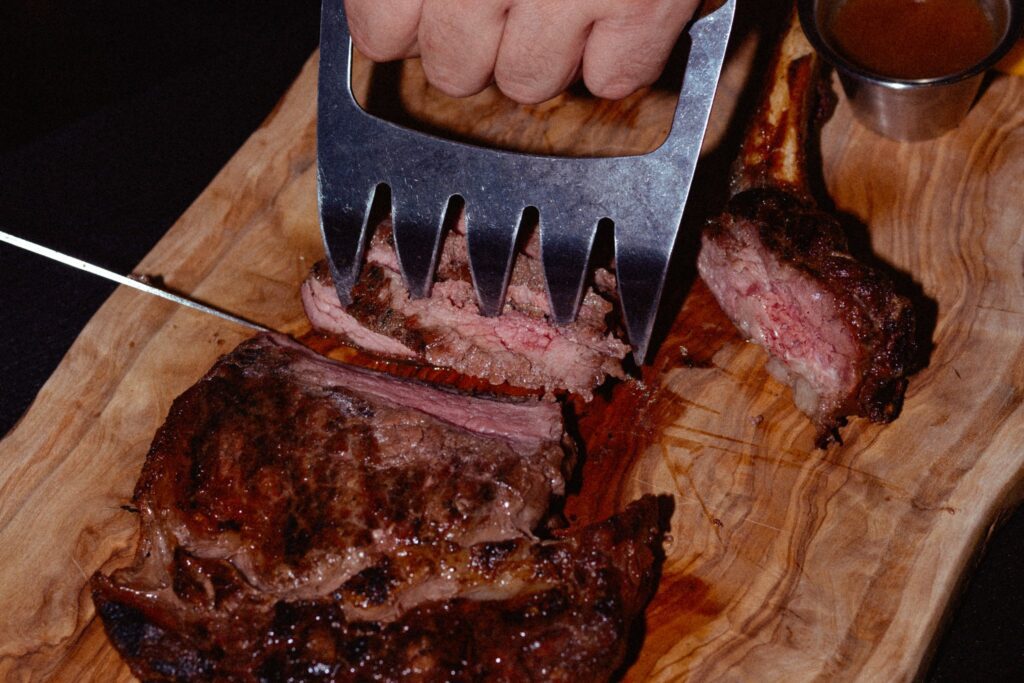
Ribeye is cut from the rib section, between the 6th and 12th ribs. It is one of the most heavily marbled steak cuts, which is why it is among the juiciest and most flavourful.
At a glance
- Cut from the rib, ribs 6 to 12
- Three muscles in one steak: the eye, the cap and the complexus
- Best cooked medium-rare to medium, over charcoal
- At Moo Casa: Rib Eye Black Angus from Uruguay, Bone-in Prime Rib Eye from the USA, Tomahawk Black Angus from the USA
Where ribeye comes from
Ribeye comes from the rib primal, a part of the animal that does little work, so fat has time to spread through the muscle. Those fine white lines are the marbling. Over the fire they melt and keep the meat juicy from the inside.
Our Rib Eye is Black Angus from Uruguay, a country that has electronically traced every head of cattle since 2006, from farm to processing.
The cap: the richest bite
Look at a ribeye from the cut side and you will see three parts. In the centre is the eye (longissimus), the large, tender heart of the steak. Wrapped around it like a crescent is the cap (spinalis). Between them sits a smaller muscle, the complexus.
The cap has more fat and a looser grain than the eye, and many steak lovers consider it the best bite of the ribeye. When we carve a ribeye at the table, it is the piece worth tasting first.
Ribeye, bone-in, Tomahawk: what’s the difference
It is the same cut. What changes is the bone and the size.
| On the menu | Origin | Weight | What sets it apart |
|---|---|---|---|
| Rib Eye | Black Angus, Uruguay | 300g | Boneless, a portion for one |
| Bone-in Prime Rib Eye | USA | 600g+ | With the rib bone, a bigger and thicker steak |
| Tomahawk | Black Angus, USA | 1kg+ | With the full rib bone, cleaned by hand. Made to share |
The Tomahawk takes its name from its shape: the long, clean bone looks like an axe handle. The bone does a job too: it shields the meat next to it and helps the steak cook more evenly.
Why charcoal, and why medium-rare to medium
Ribeye fat needs heat to melt. Undercooked, the marbling stays white and chewy. Overcooked, the meat dries out. Medium-rare to medium is the point where the fat has melted into the meat and the grain is still juicy.
At Moo Casa, ribeye is cooked in a charcoal oven. The strong, dry heat builds the crust outside and leaves the centre pink.
What to drink with it
Ribeye wants a red with body and tannins to cut through the fat. From our list, we suggest two:
- Catena Zapata Malbec (Argentina), also by the glass
- Ovilos from Biblia Chora, a Cabernet Sauvignon from Mount Pangeon
For more ideas, see our guide to pairing steak with red wine and the full wine list.
FAQ
What is ribeye?
A beef cut from the rib section, between the 6th and 12th ribs. It is heavily marbled and one of the juiciest steak cuts.
Is ribeye the same as entrecôte?
Yes. It is the same cut from the rib section: entrecôte is the French name, ribeye the English one.
What is the difference between ribeye and Tomahawk?
A Tomahawk is a ribeye with the full rib bone left on and cleaned, weighing over 1 kg. Ribeye is the same cut without the bone.
How should I order my ribeye?
Medium-rare to medium. At that point the fat has melted into the meat and the full flavour comes through.
Where can I eat Tomahawk steak in Athens?
At Moo Casa, Marinou Antipa 62-66, New Heraklion 141 21, Athens. We serve a 1kg+ Black Angus Tomahawk from the USA, cooked over charcoal and carved at the table.
Ribeye opens Meet the Cut, our series on the cuts on our menu. Next: Tenderloin, 40-day Dry Aged and Wagyu.

